


Why Stair Handrails Are One of the Most Commonly Misunderstood Home Safety Features
- Brian Brigham
- Jun 8
- 2 min read

Most homeowners don't think much about their stair handrails until they need them.
Unfortunately, that's often when they discover the handrail isn't providing the support they expected.
At TruSafe Living, we frequently see handrails that look perfectly fine but don't actually provide the safety and stability homeowners need to prevent falls.
The Problem
Many people assume that if a stairway has a handrail, it's safe.
That's not always true.
Common issues include:
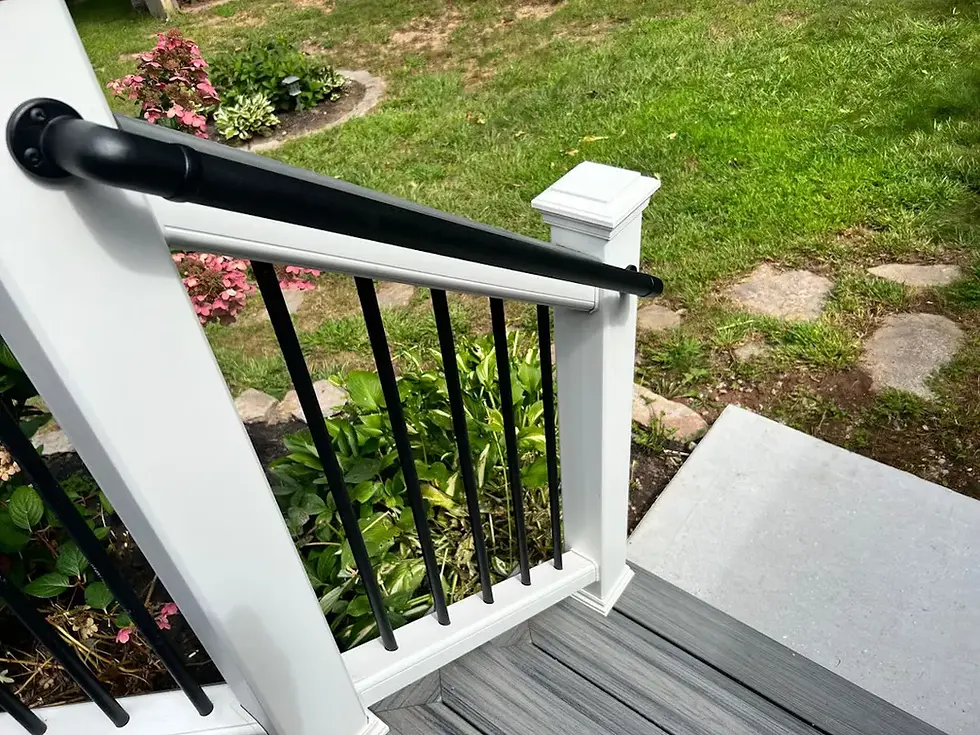
Handrails that are mounted too high or too low
Loose brackets that shift under pressure
Rails that stop before the final step
Oversized decorative rails that are difficult to grip
Handrails installed on only one side when two are needed
While these issues may seem minor, they can significantly reduce the effectiveness of a handrail when someone loses balance.
Why DIY Installations Often Miss the Mark
Installing a handrail isn't just about attaching a board to a wall.
A properly installed handrail must:
Support significant weight without movement
Be mounted into structural framing
Maintain consistent height throughout the staircase
Provide a secure and comfortable grip
Extend appropriately at the top and bottom of the stairs
Many DIY installations focus on appearance rather than functionality.
The result may look good but fail to provide the support needed during a stumble or fall.
Small Mistakes Can Have Big Consequences
Falls are one of the leading causes of injury among older adults.
Stairs are particularly dangerous because a loss of balance can result in multiple impacts before a person reaches the bottom.
A handrail is often the only thing standing between a minor stumble and a serious injury.
That's why proper installation matters.
How TruSafe Living Helps
During a home safety assessment, we evaluate stairways and handrails for:
Stability
Placement
Accessibility
Ease of use
Overall safety
Many homeowners are surprised to learn that a handrail can be present and still not provide the protection they expected.
Our goal isn't t
nd help families make informed decisions about their homes.
The Bottom Line
A handrail may seem like a simple feature, but it's one of the most important safety elements in a home.
If you're planning to stay in your home for years to come, taking a closer look at your stairs and handrails is a smart place to start.
Concerned about the safety of your home?
TruSafe Living provides professional home safety assessments throughout the Charlotte, Lake Wylie, Fort Mill, Clover, and York County areas.
Schedule a Home Safety Assessment today and gain peace of mind knowing where risks exist before an accident happens.


Comments